A custom belt is cut, punched, and stamped to the length you specify, which makes ordering the wrong size the most expensive mistake in the whole process. Unlike a belt pulled off a peg, a made-to-order strap usually cannot be swapped for the next size up, and trimming one down after the fact moves every hole, and often the maker’s mark, along with it. Spending a careful few minutes on the number before you order is worth far more than the guesswork it replaces.
The confusion almost always starts with the number itself. A belt size and a pant size describe two different measurements, and treating them as the same figure is where most orders go sideways. A belt size refers to the length of the strap at its usable middle hole, measured in inches. A pant size refers to a waistband circumference that, thanks to years of vanity sizing, is frequently an inch or two smaller than your actual waist. Order a belt to match the tag on your jeans and you will often end up fastening on the very first hole, or running out of holes entirely.
Start With Your Pant Size, Then Add Two Inches
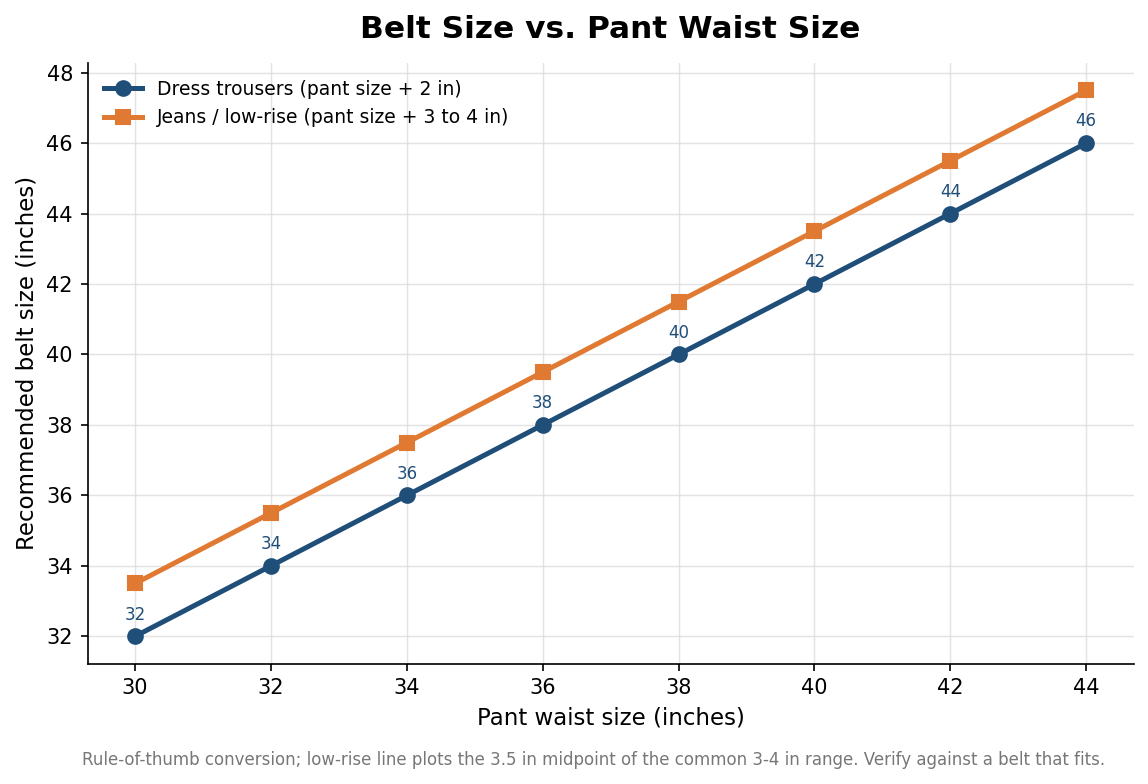
The fastest estimate is also the oldest one: take your true off-the-rack trouser size and add two inches. A 36-inch dress trouser generally pairs with a 38 belt, a 34 with a 36, and so on up the range. The two inches account for the belt wrapping the outside of the waistband, passing through the loops, and reaching a comfortable middle hole rather than straining on the last one.
The rule shifts for lower-rise garments. Jeans and casual pants sit further down the hips, where the circumference is larger, so most makers suggest adding three to four inches instead of two. If you buy across both dress and casual styles, size for whichever you wear most, since a single belt cannot sit perfectly at two different rise heights. The chart below shows how the two conversions diverge as waist size climbs.
Treat these numbers as a starting point, not a guarantee. Pant sizing is inconsistent from brand to brand, and a tag that reads 34 might measure anywhere from 33 to 36 in the real world. The conversion gets you into the right neighborhood; the next method gets you to the right house.
The More Reliable Method: Measure a Belt You Already Wear
If you own a belt that fits the way you like, it will tell you your size more honestly than any pant tag. Lay the belt flat on a table without stretching it, then run a tape measure from the hole you actually fasten to the fold where the leather meets the buckle, not the far tip of the buckle itself. Round that figure to the nearest inch and you have your belt size. Because it captures how you genuinely wear the belt, over which layers and at which hole, this method quietly corrects for stretch, posture, and the fact that most people cinch tighter or looser than a chart assumes.
If you would rather measure your body, thread a cloth tape through your trouser loops while standing relaxed, keep it snug but not tight, and round up to the nearest inch. Standing measurements taken while holding your breath or sucking in will read short and leave you on the tightest hole, so measure the way you actually stand through a normal day.
Why One Belt Covers a Range of Waists
A belt is not a single fixed length, and understanding its adjustment range takes the pressure off landing on an exact number. Most dress and casual belts are punched with five holes spaced one inch apart, and the labeled size is measured to the center hole. That layout means a belt sold as a 36 will fasten comfortably anywhere from roughly 34 to 38 inches, two holes tighter and two holes looser than its name suggests.
The practical takeaway is to aim for the center hole rather than an end. Sizing so your everyday fit lands in the middle leaves room to tighten after a big meal or loosen as the leather relaxes, and it keeps the buckle centered and the tail a sensible length. If your measurement falls exactly between two sizes, choosing the larger one usually beats the smaller, since a belt worn on its first hole looks and wears better than one straining on its last.
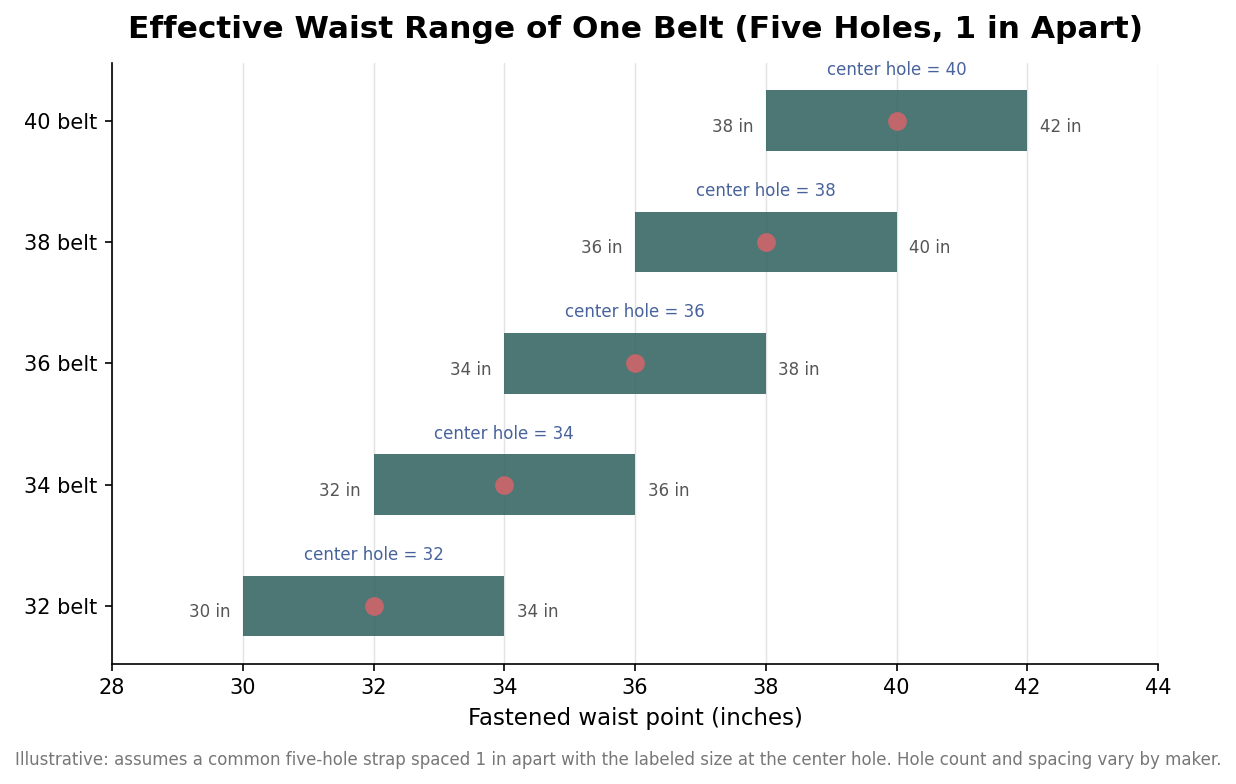
Hole count and spacing are not universal, so confirm them before you order. Some western and heavy-duty straps use seven holes, and a few makers space holes three-quarters of an inch apart rather than a full inch, which narrows the range each size covers.
Account for Stretch, Layering, and Buckle Style
Leather relaxes with wear, and the amount depends on the construction. A single-layer bridle strap stretches modestly over its first months, while braided and woven belts give considerably more, which is why a fit that feels snug on day one often settles into the ideal hole later. Buyers who like a belt tight from the start can size to the center hole and let time do the rest; those who want it perfect immediately might size a touch generous.
What you wear the belt over matters just as much. A tucked dress shirt, a heavier pair of winter jeans, or a work layer all add fabric between the belt and your waist, effectively shrinking the belt by a fraction. If the belt is bound for a uniform or a specific outfit, measure over those exact clothes. Buckle style plays a smaller but real role: a wide trophy or plate buckle consumes more of the strap’s length than a slim frame buckle, so a maker’s stated size always refers to the leather, from the fold to the working hole, and never includes the hardware.
What to Confirm on the Order
Because a custom strap is made to your specification, a short list of confirmations prevents nearly every sizing surprise. State plainly how you arrived at your number, whether it came from a belt you measured or a body measurement, so the maker can sanity-check it against their own method. Ask exactly how they define length, since some shops measure end-of-leather to center hole while others measure to the first hole, and a one-hole difference in that definition is a one-inch difference on your waist. Confirm the hole count and spacing so you know the real adjustment range you are buying, and specify the strap width and buckle type, since both affect how the finished belt reads and fits.
Finally, ask what happens at the edges of the range. Many makers place a confirmation call on unusually short or long orders, often below the low thirties or above the high forties, precisely because those sizes fall outside the assumptions baked into a standard chart. A two-minute conversation there is the cheapest insurance you will buy on the whole order, and it is the difference between a belt that fits the day it arrives and one that becomes an expensive lesson in measuring twice.